
The Numbers: $0 to $30B in Three Years
Let's start with the trajectory, because without context, the numbers don't make sense.
- 2023: $0 to $100M ARR
- 2024: $100M to $1B ARR
- 2025: $1B to $10B ARR
- February 2026: $19B ARR (adding $6B in a single month)
- April 2026: $30B+ ARR and accelerating
For context: Palantir and Atlassian took 15-20 years to reach $5B ARR. Anthropic did 6x that in under three years. It's the fastest revenue ramp in the history of enterprise software.
As Amol Avasare, Anthropic's Head of Growth, told Lenny Rachitsky: "The lion's share of what has driven our success is our research team. We have the best research team in the world."
Growth doesn't take credit for the product. But it does take credit for how fast the product reaches the right people. Here's how.
Meet the Team Behind the Growth
Amol Avasare — Head of Growth
Amol cold-emailed Mike Krieger (Anthropic's CPO, co-founder of Instagram) when no growth role existed at Anthropic. There was no job listing. He pitched the need for the function, got the meeting, and got the job.
Before Anthropic, Amol was Growth Product Lead at Mercury (the fintech unicorn) and PM for Growth at MasterClass. Before that, he was a founder (CEO of Ensu) and started his career in investment banking.
In 2022, a Muay Thai accident left him with a traumatic brain injury. He couldn't work for almost a year. The mandatory constraints he built during recovery — no alcohol, no caffeine, daily meditation, forced breaks — became the habits that now fuel his performance. As he puts it: "True freedom in life is learning how to be content when you don't get what you want."
Austin Lau — Growth Marketing (Team of One)
Austin ran Anthropic's entire growth marketing operation solo for 10 months. No team. No agency. Just Claude Code.
He had zero programming background. But using Claude Code, he built a full performance marketing stack: automated ad creation across platforms, generated Figma variations, composed Google Ads copy. Ad creation time dropped from 30 minutes to 30 seconds.
"My first reaction when we launched Claude Code was, I have zero idea what this product is for. As a marketer, it just did not really click."
— Austin Lau, Growth Marketer at Anthropic
Then he started using it. And one person accomplished what would normally require a 5-person performance marketing team.
Sunil Subhedar — Growth Marketing Lead
Sunil joined from Canva (where he led growth marketing) and before that, Uber. His approach: build cross-disciplinary teams where marketers, engineers, and data people sit together. Traditional silos slow everything down. At Anthropic's pace, silos kill you.
If you want to understand what a Head of Growth actually does day-to-day, Anthropic's team is the most extreme example in the industry right now.
CASH: The AI That Runs Its Own Growth Experiments
CASH stands for Claude Accelerates Sustainable Hypergrowth. It's Anthropic's internal system that uses Claude to automate growth experimentation.
CASH works across four stages:
- Identifying opportunities — scanning data for potential growth levers
- Building features — generating code for experiments
- Testing quality — running QA on the output
- Analyzing results — interpreting experiment data
Right now, CASH handles copy changes and UI tweaks. Its win rate matches that of a junior PM with 2-3 years of experience — and it's improving rapidly.
The meta-play is obvious and powerful: Anthropic uses its own product to grow its own product. Every improvement to Claude makes CASH better, which makes growth faster, which funds more research into Claude. It's a self-reinforcing flywheel.
5 Engineers = 20 Engineers: The Ratio That Changed Everything
This is the insight that's reshaping how Anthropic thinks about team structure.
With Claude Code, a team of 5 engineers now produces the output of 15 to 20 engineers. Engineering productivity has tripled or quadrupled. But PM and design productivity haven't scaled at the same rate.
The result: one PM is suddenly managing the output of what used to be a 15-20 person engineering team. That's unsustainable.
Anthropic's response is counterintuitive: hire more PMs, not more engineers.
They also deputize product-minded engineers as "mini-PMs" for any project with less than two weeks of engineering time. These engineers run their own scope, make product decisions, and ship without a formal PM involved.
This has massive implications for the industry. If you're a growth professional thinking about your next career move, the PM role at AI-native companies is about to get much more important — and much more demanding.
70/30 Big Bets: Why Anthropic Doesn't A/B Test Its Way to Growth
Most growth teams follow a ratio like this: 60-70% small optimizations, 20-30% big swings. Button color tests, copy variants, funnel tweaks. Volume of experiments = velocity of learning.
Anthropic flips this entirely: 70-80% big swings, 20-30% small optimizations.
Why? Because when your core product value is driven by AI, the future value is orders of magnitude higher than today's value. A 5% conversion improvement on today's funnel captures a shrinking share of an expanding pie. A bet on how users will activate next quarter — when Claude is 3x more capable — captures the whole pie.
Micro-optimizations still matter, but they're not where the leverage is. The leverage is in structural bets about how the product evolves.
"Success Disasters": When Your Growth Breaks Your Company
Amol spends roughly 70% of his time on what he calls "success disasters" — problems that exist because growth was too fast.
"Roughly 70% of what I spend my time on is what we internally refer to as success disasters — that is where things have gone so well that other things are breaking now."
— Amol Avasare, Head of Growth at Anthropic
Think about it: when you add $6B in ARR in a single month, everything downstream breaks. Billing systems. Support queues. Onboarding flows. Enterprise contracts. Infrastructure. Across acquisition, activation, and monetization, it's constant firefighting from one urgent issue to the next.
This is a problem most Head of Growth candidates never prepare for. You study how to grow. You don't study what happens when growth outpaces everything else.
No PRD? No Problem. How 80% of Projects Ship Without One
60-80% of Anthropic's growth projects have no PRD (Product Requirements Document).
For smaller work, kickoffs happen on Slack. A product-minded engineer and a PM align in a thread, and the project ships. No doc, no meeting, no ceremony.
For larger projects (anything touching legal, safeguards, or multiple teams), Amol insists on a proper 30-minute cross-functional kickoff to surface concerns early. But even then, the goal is alignment, not documentation.
The one thing AI can't automate? Getting six people in a room to agree. As Amol and his head of design joke: even with AGI, it'll still be impossible to align six stakeholders. Cross-functional coordination — managing opinions, navigating politics, mediating tradeoffs — remains the bottleneck that AI doesn't touch.
Strategic Friction: Why Adding Steps Improves Conversion
This goes against every growth playbook ever written: Anthropic intentionally adds friction to its onboarding.
Not annoying friction. Useful friction — steps that help users understand what the product does and whether it fits their needs. Amol has seen this pattern work across Mercury, MasterClass, Calm, and now Anthropic.
The logic: if you remove all barriers, you get high sign-ups but low activation. Users churn before they understand the value. If you add steps that demonstrate value (even if they slow the funnel), you get fewer sign-ups but dramatically higher activation and retention.
Activation is, in Amol's words, "the single highest-leverage growth problem in AI."
One Marketer, $19B in Revenue
When the story broke that Anthropic's entire growth marketing team was one person, the tech press went wild. But the story isn't that it was one person — it's how one person did it.
Austin Lau used Claude Code to:
- Generate ad variations across Google, Meta, LinkedIn, and TikTok
- Automate creative production in Figma
- Compose and iterate on ad copy
- Build dashboards and reporting without writing code
Industry research suggests 65% of marketing tasks could be automated with AI. Austin proved it. One person with the right tools outperformed what traditionally requires an entire performance marketing team.
The lesson for growth marketing professionals: the value isn't in execution anymore. It's in strategy, taste, and knowing what to build. The hands-on work is increasingly done by AI.
The Research Flywheel: "Claude Is Growing Itself"
This is the most mind-bending part of Anthropic's growth story.
When Anthropic's engineers use Claude Code to build Claude, they generate data about how Claude performs. That data feeds back into model training. Better models make Claude Code better. Better Claude Code makes engineers more productive. More productive engineers ship more features. More features drive more revenue. More revenue funds more research.
Claude is literally growing itself. The product improves the tools that improve the product. It's a flywheel where the output of each cycle feeds the input of the next.
This is what Amol means when he says the growth team isn't the main driver — the research team is. Growth's job is to make sure the flywheel reaches the right people as fast as possible.
Cowork: The AI Agent That Catches Misalignment
Anthropic uses Cowork — integrated with Slack via MCP — as a weekly AI agent that scans ongoing projects for misalignment.
The agent looks for overlapping work, directional conflicts, and teams pulling in different directions. In one case, it caught a major enterprise team misalignment that would have wasted weeks of engineering time.
At a company growing this fast, with projects shipping without PRDs and engineers making product decisions, misalignment detection isn't a nice-to-have — it's infrastructure.
What Every Growth Team Can Steal from Anthropic
You don't need to be building an AI model to apply these principles. Here's what transfers:
- Flip the ratio. Spend 70% of your time on big bets, not small experiments. Ask: "What's the structural bet that matters if this works?"
- Automate experiments. Even without CASH, you can use Claude to generate hypotheses, write experiment briefs, and analyze results. Start with copy tests.
- Add friction that teaches. Don't optimize for sign-ups. Optimize for understanding. Activated users > registered users.
- Kill the PRD for small work. If a project takes less than two weeks of engineering, skip the doc. Align in Slack. Ship.
- Hire PMs when engineering scales. If your engineers are using AI tools and shipping 3x faster, you don't need more engineers. You need more PMs to direct the output.
- Plan for success disasters. What breaks if you 3x next quarter? Prepare for that, not just how to get there.
- Scan for misalignment weekly. Use AI (or just a human) to check that teams are pulling in the same direction. Misalignment at speed is expensive.
- Let one person do the work of five. Give a great marketer the right AI tools and see what happens. You might be surprised.
If you're looking for your next growth role, browse Head of Growth positions or check our salary guide to see what these roles pay in 2026.
This article is based on Amol Avasare's appearance on Lenny's Podcast (April 5, 2026), Lenny Rachitsky's takeaway thread, and additional reporting from CapitalAI Daily, Impact News, and Anthropic's own research on AI at work.
About the Speakers
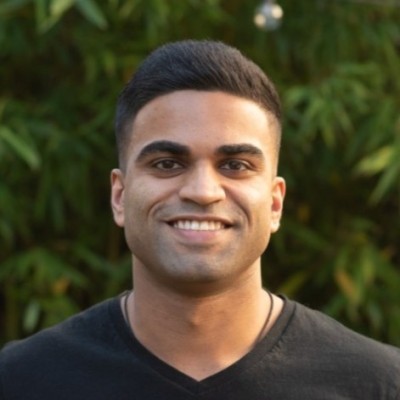
Head of Growth at Anthropic (ex-Mercury, ex-MasterClass)
Follow on LinkedIn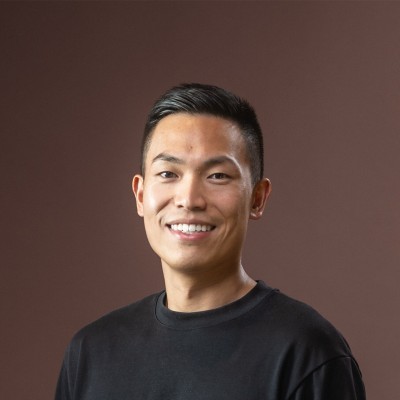
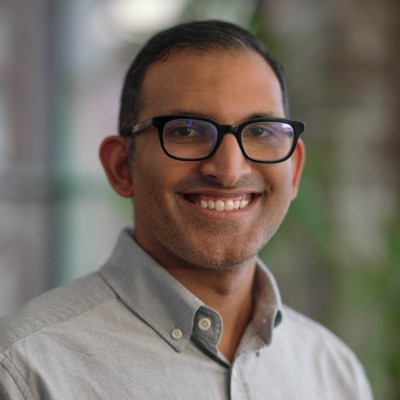
Growth Marketing Lead at Anthropic (ex-Canva, ex-Uber)
Follow on LinkedInLooking for a growth role?
Browse head of growth jobs with real salaries on Growth.Talent.
Keep reading
How Ramp Built the Fastest-Growing SaaS Growth Team in History
Ramp hit $100M ARR in two years and grew 4x during a market downturn. Their Head of Growth Sri Batchu believes 70% of your experiments should fail. Their VP of Product Geoff Charles shipped 60+ products in a single year. Here's the playbook behind the fastest-growing SaaS company ever built.
head of growthHow OpenAI Grows ChatGPT: From Chatbot to $280B Platform
ChatGPT reached 800M+ weekly active users faster than any product in history. Now Fidji Simo (ex-CEO of Instacart) is leading OpenAI's transformation from chatbot to personal super-assistant. Here's how the most important consumer product of the decade grows.
growth marketingHow Qonto Built Europe's Largest Growth Team: 300 People, 500K+ Clients
Qonto went from 5,000 to 500,000+ clients in under 5 years, built what GrowthMakers called 'France's largest growth team' with 300 people, and expanded across 4 European markets. Here's how the French neobank built the most ambitious growth org in European fintech.
Get growth insights weekly
Curated roles + guides. Every Monday. Free.